
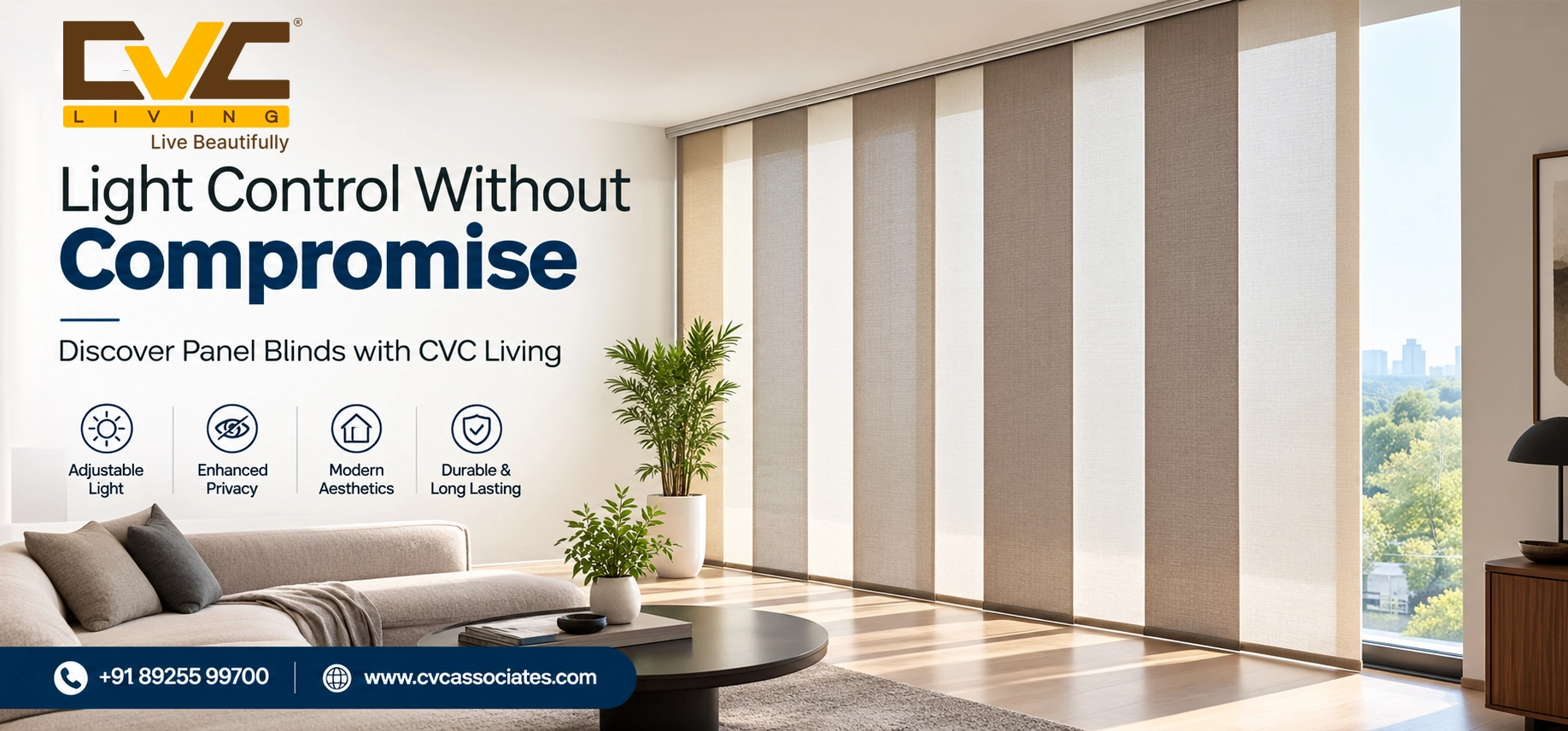
Large windows and sliding glass doors bring in wonderful natural light, but they also come with a real challenge: controlling that light and maintaining privacy without covering the glass in heavy, fixed drapery. This is exactly the gap that vertical blinds for windows are designed to fill, using slim, rotating fabric or PVC vanes that can be angled for softer light or drawn fully to one side for an unobstructed view. Whether it is a home living room with floor-to-ceiling glass or a busy office space, CVC Living works with customers to find a panel system that balances practicality with a clean, modern look.
Why Vertical Blinds for Windows Suit Large Glass Areas
Traditional curtains can feel bulky and require significant wall space to stack neatly when drawn open, which becomes a real limitation on wide sliding doors or expansive glass walls. Vertical blinds for windows solve this by stacking compactly to one or both sides, taking up far less space while still covering the full width of the glass when closed. The vanes can also be tilted to control the exact angle of incoming light throughout the day, offering a level of flexibility that fixed drapes simply cannot match.
Choosing Vertical Blinds for Large Windows the Right Way
Selecting vertical blinds for large windows involves more than just picking a fabric colour. Vane width, typically ranging from 89mm to 127mm, should be chosen based on the overall window size, since wider vanes suit larger openings while narrower ones work better on modest windows. The track mechanism also matters significantly for wide installations, as a sturdy, well-supported track prevents sagging in the middle of a long window run, a common issue with lower-quality systems installed on oversized glass panels.
Office and Home Window Blinds: Different Needs, Different Choices
The requirements for office and home window blinds often differ in meaningful ways. Offices typically prioritise consistent light diffusion across open workspaces and a uniform, professional appearance, often favouring neutral tones and fabric vanes that reduce glare on computer screens. Homes, on the other hand, have more flexibility to introduce colour, texture or even printed patterns into vertical blind fabric, and may prioritise blackout-lined vanes in bedrooms for better sleep quality alongside sheer options in living areas for softer daytime light.
Materials and Control Options Worth Knowing
Fabric vanes offer a softer, more textile-like appearance and are popular in both homes and offices, while PVC vanes are more moisture-resistant, making them a practical choice for kitchens, bathrooms or humid coastal climates. Control options range from a simple manual wand and chain system to motorised setups that can be operated remotely, which is increasingly popular in larger homes and offices where the vertical blinds cover unusually wide expanses of glass that would otherwise require significant physical effort to adjust.
How CVC Living Guides the Selection Process
CVC Living helps customers work through these choices by considering the room's function, the amount of natural light it receives, and whether privacy or light diffusion is the higher priority. For spaces that combine both home and work use, such as a home office with a large window, this guided approach often results in a hybrid recommendation, like light-filtering fabric vanes paired with a manual chain control, that balances comfort with practicality.
Maintenance Tips to Keep Your Blinds Looking Sharp
Vertical blinds generally need only light, regular dusting with a soft brush attachment or microfibre cloth, and fabric vanes can often be spot-cleaned when needed. PVC vanes are easier to wipe down with a damp cloth, making them particularly low-maintenance for busy households or commercial spaces. Keeping the track mechanism free of dust also helps prevent sticking or uneven vane movement over time, especially in wider installations that see frequent opening and closing.
Wrapping Up
Vertical blinds for windows offer a rare combination of practicality and design flexibility, particularly for large glass areas where traditional curtains struggle to perform well. Getting the vane width, material and control system right makes a noticeable difference in both day-to-day usability and long-term durability. CVC Living's approach of matching the blind system to the specific room and window, rather than offering a single standard option, helps homes and offices alike get a solution that actually fits their space.
Frequently Asked Questions
They stack compactly to the side, cover the full width of wide glass without bulk, and allow precise light control by tilting the vanes, which fixed curtains cannot easily replicate.
Vane width should match the window size, and a sturdy, well-supported track is important to prevent sagging on wide installations.
Offices usually favour neutral tones and glare-reducing fabric vanes for uniform workspaces, while homes have more flexibility for colour, texture and blackout-lined options.
PVC vanes are more moisture-resistant and are a practical choice for kitchens, bathrooms or humid coastal climates.
Yes, motorised control systems are available alongside manual wand and chain options, particularly useful for wide window installations.